

Choosing a base
Five neighbourhoods, and who each one is for
Every guide gives you the same five names on the same map. The map does not tell you which of them is at the bottom of a hill you will climb four times a day.
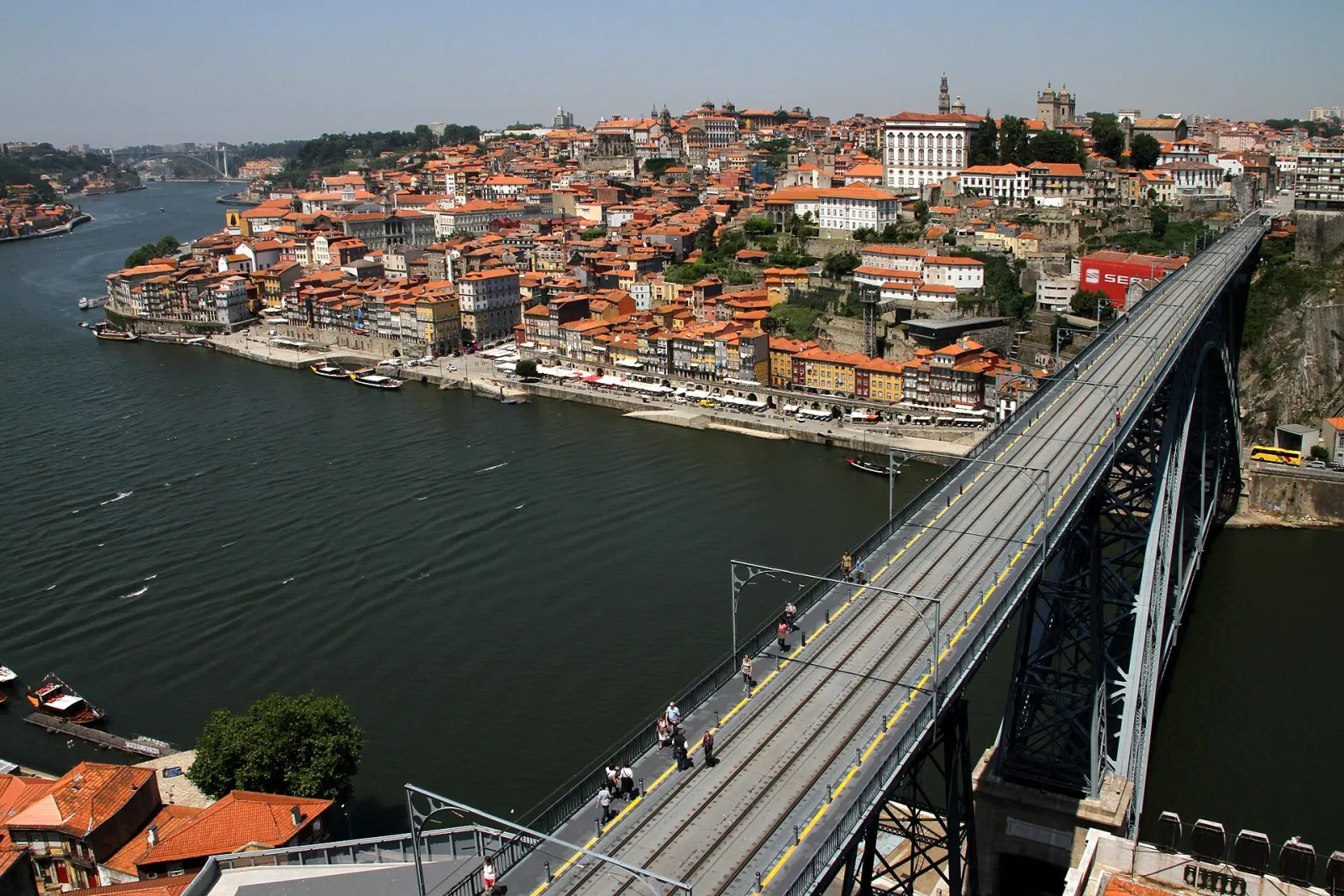
Porto is small. You can cross the middle of it on foot in half an hour, which makes the usual advice — "stay central" — nearly useless, because almost everything is central. What separates the neighbourhoods here is not distance. It is gradient, noise and whether you have a car.
So this page compares them on those, and not on charm. All five are pleasant. Only some of them will suit your particular four days.
Three questions that decide it
- Are you walking up hills with luggage? Porto is a gorge. The difference between the top and the bottom of the old town is a real climb, and it happens on granite setts. This rules out more bookings than anything else on the page.
- Do you sleep through noise? Two areas are loud, in different ways and at different hours, and both are loud in a way that room descriptions do not mention.
- Is there a car? If yes, four districts are access-controlled and the centre is a poor idea. If no, ignore half the internet's advice about parking.
Answer those three and the list below usually comes down to one or two options.
Side by side
The five, on what actually differs
Walking times are to Ribeira, at the bottom of the old town, because that is the reference point every visitor uses.
| Neighbourhood | The hill | Night-time noise | To the riverfront | Rates | Suits |
|---|---|---|---|---|---|
| Ribeira & Se The postcard | You are at the bottom of it | Terraces on the quay until late | You are on it | Highest for a view room | Short first visits, travelling light |
| Aliados & Baixa The practical centre | Broadly level | One loud cluster of streets, otherwise quiet | 15 minutes down, 20 back up | Mid-range | Most people, most trips |
| Cedofeita & Boavista West and quieter | Mild | Residential | 25-40 minutes, or the metro | Below the centre | Longer stays, bigger rooms, a car |
| Foz do Douro The coast | Flat | Quiet | Tram or bus, 15-30 minutes | Varies; thin supply | Summer, families, a second visit |
| Vila Nova de Gaia The other bank | Steep behind the quay | Quiet by eleven | 10 minutes across the bridge | Below the north bank | The view, port lodges, value |
In detail
Each one, at length
Choosing
What people ask before picking a neighbourhood
Where is the best place to stay in Porto for a first visit?
Aliados and Baixa for most people: it is on the metro, close to level, and ten to fifteen minutes from everything. Ribeira is better if you are travelling light, able on your feet, and want to walk out of the door into the old town.
Which part of Porto is quietest at night?
Cedofeita and Boavista to the west, and Foz on the coast. Gaia is quiet after about eleven. The two noisy areas are the Ribeira quay and the cluster of bar streets around Rua Galeria de Paris in Baixa.
Is it better to stay in Porto or Gaia?
Gaia is cheaper and has the view of Porto, at the cost of crossing the bridge twice a day. Porto puts you inside the streets you came to see. Neither is wrong; the crossing is the whole decision.
Is Porto walkable?
Yes, and steeply. The centre is about half an hour end to end on foot, but it is built down a gorge on granite setts, so walkable does more work in that sentence than it usually does.
Where should I stay in Porto with a car?
Boavista, Foz or Vila Nova de Gaia. Four districts in the centre are access-controlled and street parking there is scarce and paid.